Informally, collections of objects.
Let’s talk about an object o and a set A. If o is a member or an element of A, the notation is used. A set is described by listing elements separated by commas, or by characterizing property of its elements within braces .
If all members of set A are also members of set B, then A is a subset of B, denoted by . A set is a subset of itself, hence the equal sign there too. (But note that and are sometimes used interchangeably.)
We call A a proper subset of B if and only if A is a subset of B but A is not equal to B.
Some binary operations on sets:
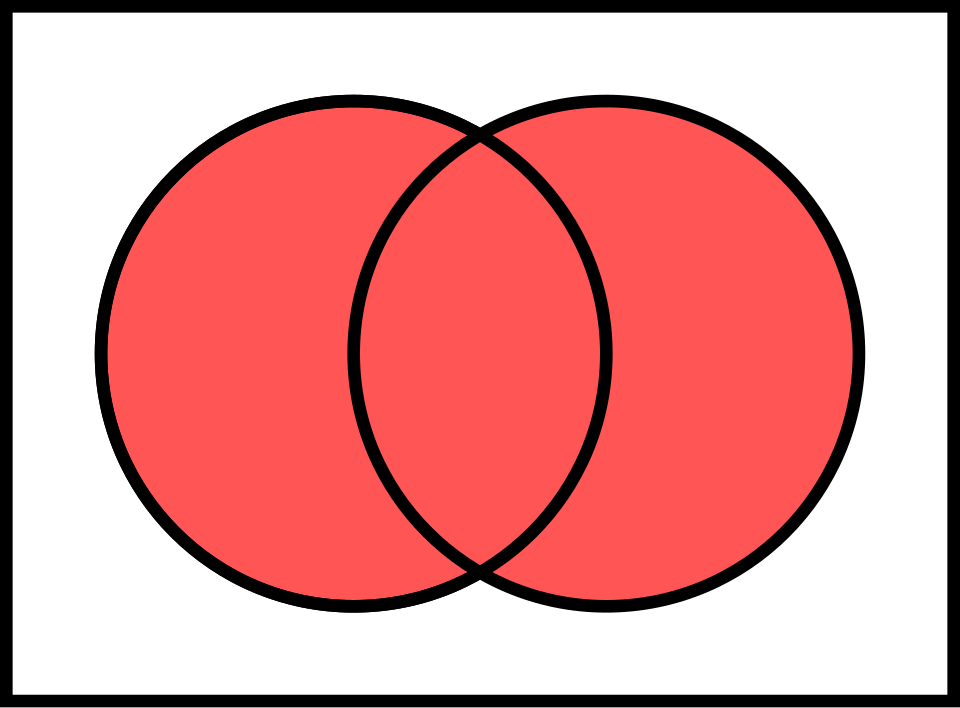
- Union: is the set of all objects that are a member of A or B or both.
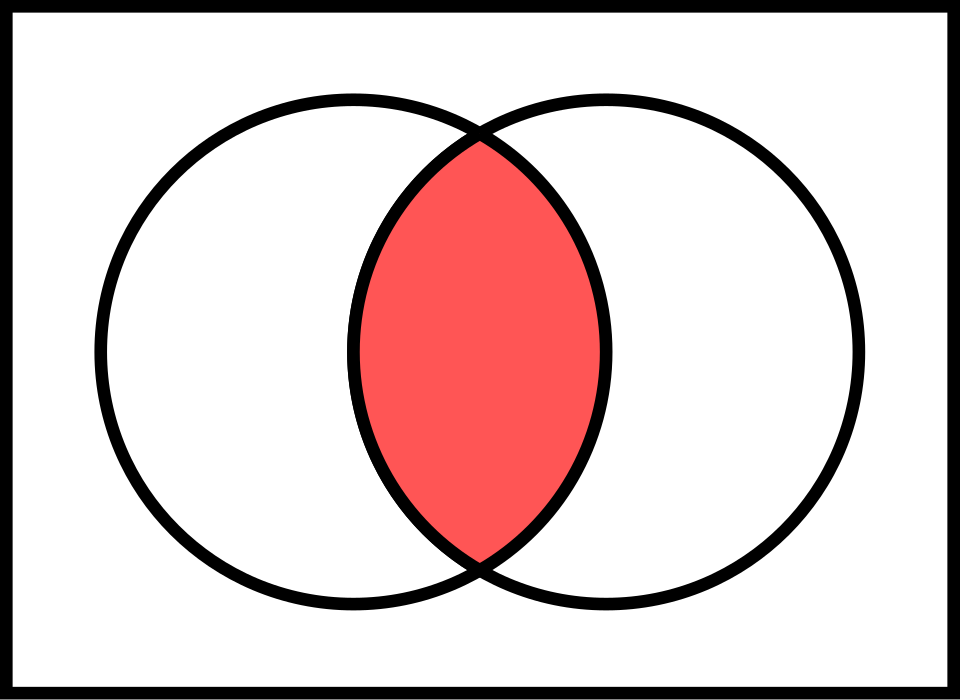
- Intersection: is the set of all objects that are a member of both A and B.
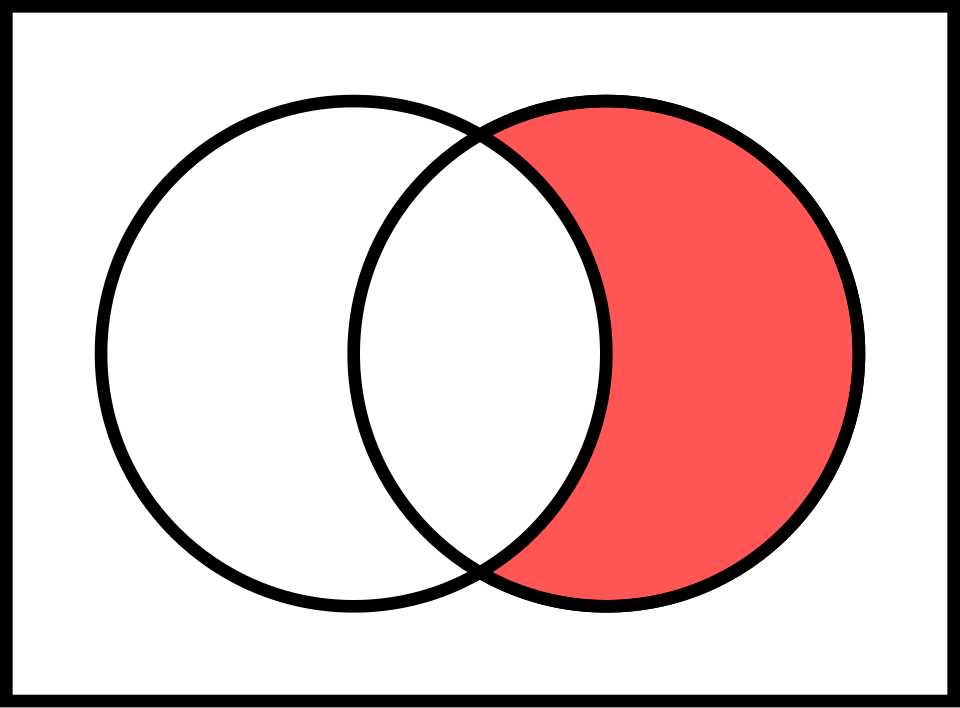
- Set difference: of B and A, denoted is the set of all members of B that are not members of A. If B is the universal set U we call it the absolute complement of A and use the notation . If it’s not, we call it the relative complement of A. Below is shown.
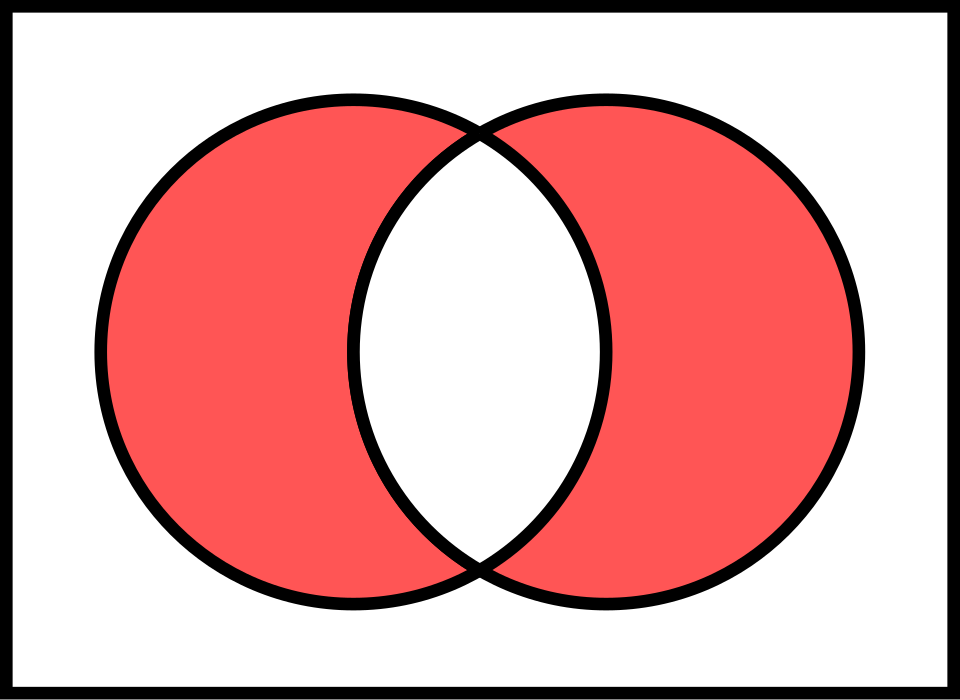
- Symmetric difference: of sets A and B denoted by is the set of all objects that are a member of exactly one of A and B (elements which are in one of the sets, but not in both). It is the set difference of the union and the intersection, so
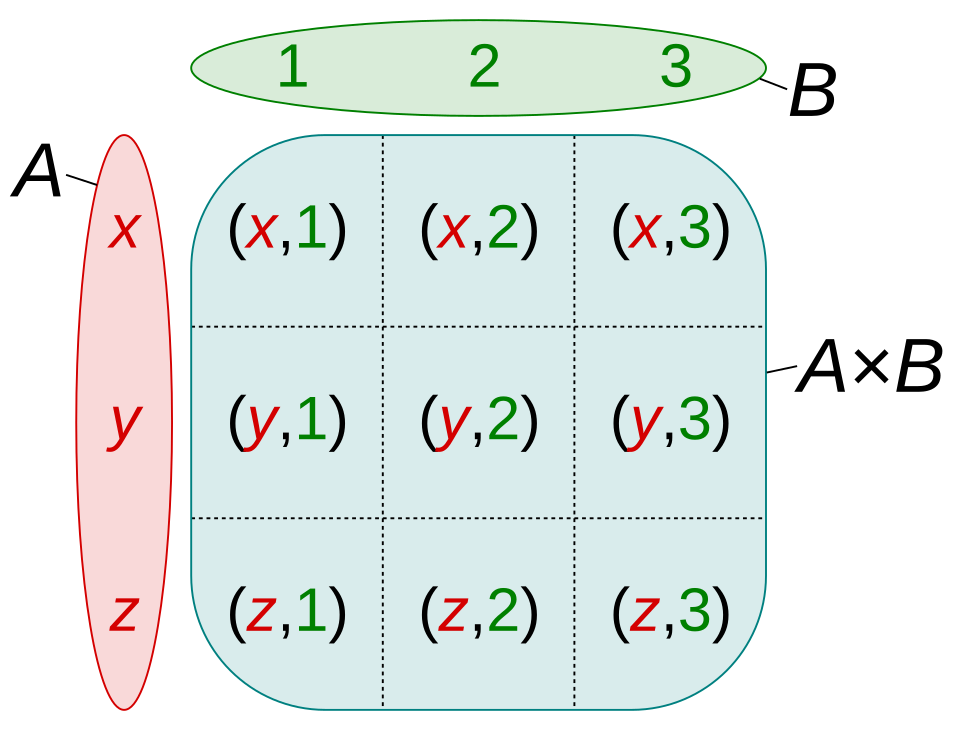
- Cartesian product: of sets A and B is denoted by and is the set whose members are all possible ordered pairs where a is a member of A and b is a member of B. . Below is the Cartesian product of the sets and :
Some basic sets of central importance are the set of natural numbers , the set of real numbers and the empty set . The empty set is the unique set containing no elements. It’s also called the null set. Also denoted by .
The power set of a set A, denoted is the set whose members are all possible subsets of A. Ex. the power set of is . Notably, contains both A and the empty set.